

Introduction
The Hathor Temple Egypt is a popular tourist destination located in the Dendera city in Qena in Upper Egypt. The temple’s architecture features beautiful columns, hieroglyphic reliefs, and intricately decorated ceilings. It is dedicated to the goddess Hathor and is an ancient monument, partially preserved and studied until now. The preserved part of the temple belongs to the Ptolemaic and Roman periods. People visiting the temple usually include it in the Egypt Travel Packages and plan their travel itinerary in Egypt.
Dendera Temple can be included in a wider journey through Egypt’s ancient sites. Travelers planning to explore multiple destinations can browse Multi Country Tours to discover itineraries that combine Egypt with other countries.
Table of content:
Why Is the Temple of Hathor Important?
Hathor is an Ancient Egyptian goddess whose cult was very popular. The goddess is associated with love, music, dance, joy, motherhood, and the sky. The temple in Dendera was one of the religious centers of ancient Egypt, and the decoration of its interior reflects this significance. Most of the temple’s drawings and sculptures are dedicated to Hathor, the goddess whose cult had been celebrated here.
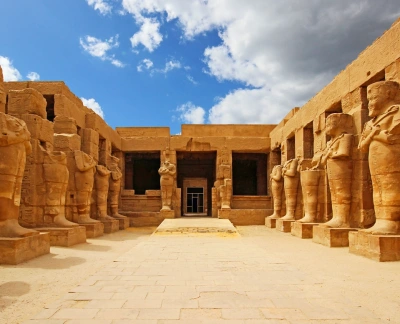
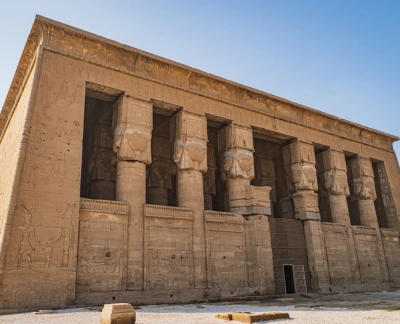
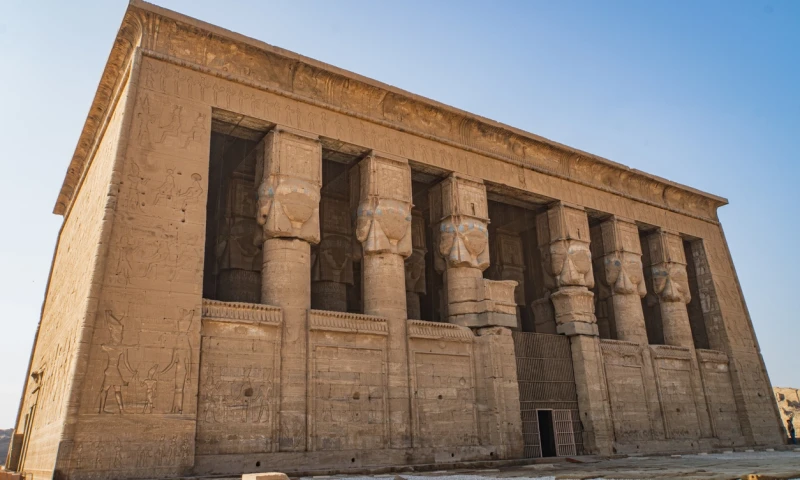
The first thing that attracts the eye when visiting the temple is its great gateway, with enormous standing columns at the entrance. The Hathoric capital is carved out of the stone of the column heads, and the image of the goddess is repeated many times in the architecture of the temple. This architectural refinement is a great honor for Hathor, which clearly shows the high status of the goddess in Egyptian religion. Another peculiarity of these columns is the depiction of the sistrum, the music instrument sacred to the goddess Hathor.
The symbolic meaning of the objects and images found in the Dendera temple greatly influenced Egyptian society. Apart from illustrating the life of one of the most popular gods, the reliefs depict scenes familiar to every Egyptian. At the same time, the astronomical calculations contained in the images represent the high level of development of ancient Egyptian astronomy.
Dendera Temple Facts: History and Architecture
The main Temple of Hathor, which modern tourists can admire today, was built mainly during the Ptolemaic Period and the successive Roman Period. The construction of the present temple was initiated by Ptolemy XII in approximately 54 BCE, and it was further decorated and enlarged by his successors, including the Roman emperors.
At the same time, the history of Dendera begins long before the foundation of the modern temple was laid. Thus, this ancient monument has a great historical and cultural significance to this day.
The layout of the temple includes majestic pillars, halls, sanctuaries, and decorated with ancient writing walls. Many of the reliefs are dedicated to the depiction of gods, ancient rulers, and rituals. The temple’s interior is one of the most well-preserved examples of Egyptian ancient art that modern people can see today.
For this reason, it may be of interest to the representatives of the modern age to explore the fascinating world of the ancient Egyptian civilization. In this regard, close attention should be paid to the many intriguing details of this architectural structure.
The Astronomical Ceiling and Dendera Zodiac
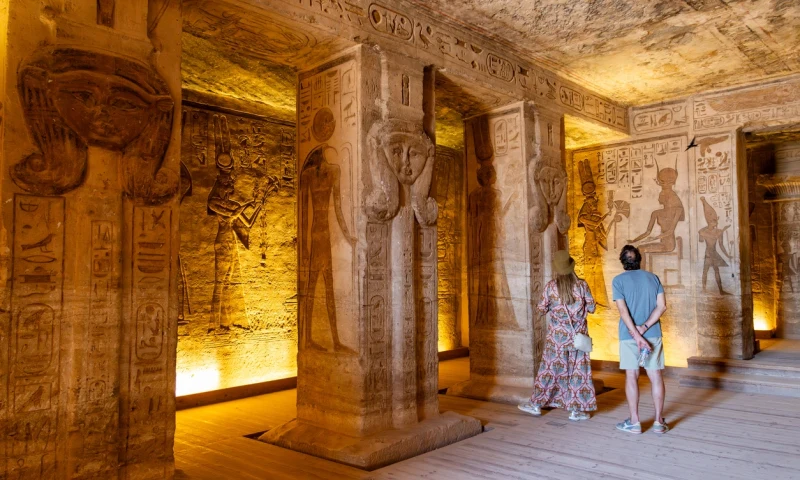
One of the unique aspects of the Dendera Temple is its celestial decorations. The temple’s paintings depict images of the heavens and the zodiac signs familiar to every Egytian. The zodiac signs were part of the symbolic language that the ancient people used to interpret the universe.
The most famous of these decorations is the Dendera Zodiac, an illustration of the heavens in the form of a circle. This artifact is an example of the ancient world’s blending of Egyptian beliefs and culture with contemporary astronomical ideas.
The original relief, today displayed in the Louvre Museum, was taken to Paris in the nineteenth century. It is the only surviving depiction of an ancient Egyptian understanding of the cosmos. Although the original artifact is not in the Dendera temple, the temple is closely associated with astronomy and has remarkable decorations.
When visiting the temple, be sure to see the other interesting decorations and not only the zodiac signs. The paintings and reliefs found in the ceilings of the temple’s halls are worth special attention. Besides the zodiacs, the ceilings depict various mythological figures and stories. The ancient Egyptians decorated the ceilings of the Dendera Temple with mythological scenes and writings to convey their beliefs about the universe.
Those who wish to explore the ancient Egypt beyond the Dendera temple and its remarkable celestial symbols can consider Egypt Nile Cruises to plan their itinerary.
Detailed Reliefs and Religious Artwork
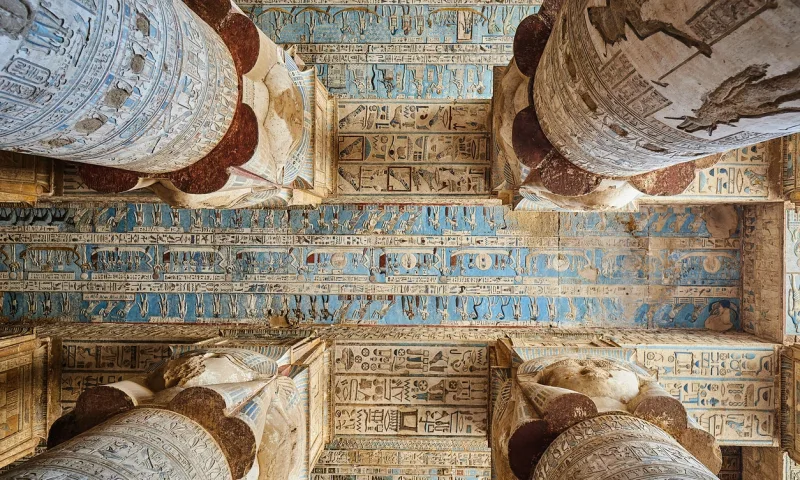
The reliefs from Dendera represent the most valuable finds among the temple’s treasures. The figures of Egyptian gods, hieroglyphs, and scenes depicting the ritual offerings of rulers and kings represent the outstanding qualities of the reliefs. Besides, some inscriptions narrate the events when Roman emperors perform the traditional Egyptian rituals. It can be seen how the Roman emperors used the architectural complex in their religious practices.
In the first image, one can see the elements of the column and the interior of the temple, decorated with the features of Hathor’s distinctive goddesses. Other images contain various gods, goddesses, and ritual scenes common for Egyptians. This unique find allows scholars to understand the meaning of religious rites performed in Egyptian temples and the significance of the gods’ images for the ancient Egyptians.
Thus, the described above qualities of the reliefs found in the temple of Hathor can be used by modern representatives of tourism to promote the ancient culture of Egypt. Explaining to the visitors the meaning of the inscriptions and scenes depicted on the reliefs, the guides can present the religious practices of the ancient people. The scenes common for various gods and goddesses can also become a topic for discussion about the differences and similarities of ancient cultures.
Visiting Dendera Temple in Qena
Dendera Temple is a unique place to include in your Upper Egypt route as it is quite different from the tourist destinations associated with ancient Egypt’s royal family and hundreds of years of history.
Before visiting the monument, it might be helpful to read articles from Volkena’s Egypt Travel Guide . For instance, those who plan to explore the southern part of the country may benefit from the Aswan Attractions guide and learn the history of this place and other interesting facts.
Those who decide to get to the capital of Egypt can surf the web and explore the wonders of this city and its rich heritage. For example, our article Cairo Attractions presents the most popular handmade and modern attractions. If you want to cover everything you can see in Upper and Lower Egypt, follow this link: Alexandria Egypt Attractions . This place is ideal for admirers of ancient history, as well as modern culture and art.
While observing the temple, do not forget to admire the beauty of its columns, inscriptions, reliefs, and ceiling decorations. In addition, when visiting the temple, you can also take advantage of the guidance of an expert who can reveal to you the meaning of the preserved artifacts.
FAQs
How old is Dendera Temple?
The main temple of Hathor was consecrated in the first century BC. Construction started around 54 BCE and was continued by the following Ptolemaic and Roman authorities. Thus, the current state of the temple is approximately two millennia old. However, the territory of the temple was used for religious purposes long before the construction of a monumental structure.
Where is the Temple of Hathor located?
The temple of Hathor is located in Dendera, a village near Qena in Upper Egypt. This is one of the most significant ancient archaeological sites in Egypt.
Who was first, Hathor or Isis?
Hathor and Isis are goddesses of Ancient Egypt, and the worship of these goddesses began approximately at the same time. Therefore, it is difficult to determine which goddess should be considered older. The goddess Hathor is mentioned in the earliest ancient Egyptian texts. In turn, the cult of Isis was especially popular in the period of the Roman Empire.
What is Dendera Temple famous for?
The temple of Dendera is famous for being dedicated to the goddess Hathor. The temple has a unique design that incorporates many signs of ancient belief. Besides, the temple of Hathor is famous for the preserved Dendera Zodiac.
What can be seen in Dendera Temple?
It is possible to see the architecture and interior of the temple complex, including the colossal Hathor-headed pillars, a number of halls decorated with hieroglyphs, and religious scenes painted on the ceiling of the temple. Also, visitors have the opportunity to see ancient artifacts representing the history of ancient Egypt.