

Introduction
If you are planning your first trip to Egypt, one of the best ways to comprehend this country is through its ancient history. Following the river Nile, thousands of ancient monuments, temples, tombs, and pyramids were built by the ancient Egyptians to signify their social lifestyles, religion, culture, and even their political life.
The Egypt travel guide introduces you to the ancient history of pharaohs, discovers the eras of the ancient Egyptian civilization, and provides you with a list of archaeological sites worth noting. Delving into the background of these ancient wonders will allow you to have a more meaningful experience when touring Egypt and visiting these historical places.
For a more organized tour of Egypt and to create itineraries according to your preferences and schedule, you can browse through the Egypt travel packages provided by Volkena Tours. Additionally, to gain more insights about touring Egypt, you can read the Egypt travel guide.
Table of content:
A Brief History of Ancient Egypt
The ancient Egyptian civilization emerged along the banks of the Nile River, which provided an abundant supply of resources and arable land. The history of this renowned culture is extensive, as it witnessed a number of historical and archaeological significant events. These include the evolution of social and political systems, as well as diverse religious practices and cultural beliefs.
Ancient Egypt was governed by numerous dynasties, each of which made a significant contribution to the development of this civilization. For instance, the Old Kingdom (~2700 BCE) is famous for its remarkable constructions, namely the pyramids, which were built by the Egyptians in the capital of Memphis. Subsequently, during the Middle Kingdom (~2000 BCE), the country prospered and became stronger than ever before.
The New Kingdom (~1550 BCE) was characterized by a rapid expansion of Egyptian influence, as well as the construction of luxurious palaces and temples. It was during this period that most of the sacred edifices in the city of Luxor were founded or discovered. Finally, the ancient Egyptian civilization ended when the Persians occupied Egypt, having succeeded the native pharaohs. In addition, the Macedonian Greeks, who also ruled this country, played a major role in the final stage of the ancient Egyptian history. One of the last native dynasties of Egypt was the Ptolemaic one, which was influenced by both the ancient Egyptian culture and the Hellenistic civilization. Thus, these factors explain the variety of historical significance and architectural peculiarities of the monuments of ancient Egypt.
The Pharaohs and Their Civilization
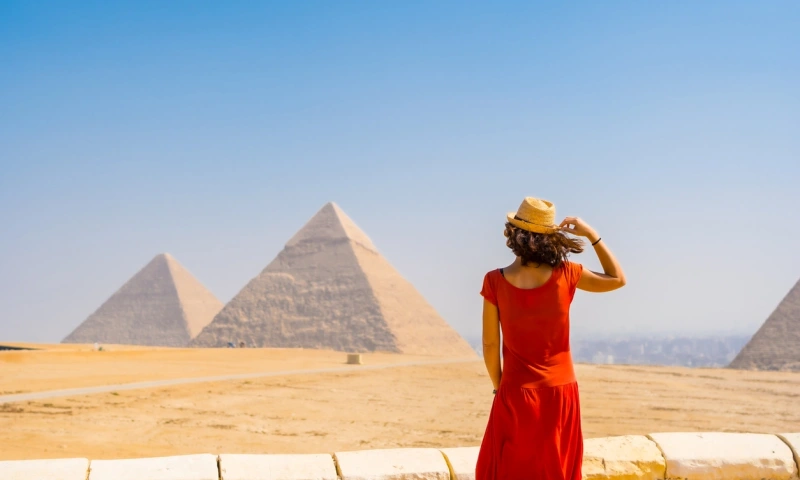
Pharaohs were the central figures of the political and religious life of the ancient Egyptians. They were gods’ representatives on earth, and they had to perform particular rituals to ensure the country’s stability. They built monuments, temples, and pyramids to represent their power and help them reach eternity.
People’s beliefs were strongly connected to religion. Gods and goddesses such as Amun, Ra, Osiris, Isis, Hathor, and many others were worshiped. Ancient Egyptians believed in life after death, so they made amazing mummies and built magnificent tombs and pyramids so that the deceased could move to the next world comfortably.
One of the most significant inventions of the ancient Egyptians was hieroglyphics. This writing was used to record information that could be important for future generations. On monuments, temples, and tombs were carved religious texts, the message of the pharaohs, and other interesting facts about the ancient civilization.
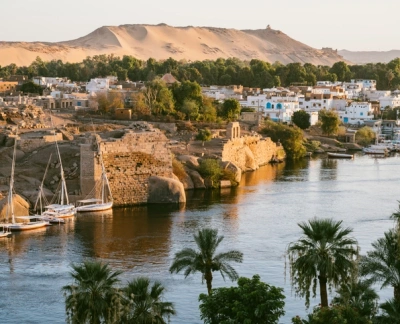
The Nile River played a crucial role in Egyptians’ lives. They relied on it for irrigation and used its resources for trade and transportation. Many ancient Egyptians lived near the river, so most of the country’s wonders are located along the Nile. It is also a great guide for exploring ancient Egypt.
The Most Important Ancient Egyptian Sites to Visit
Egypt’s archaeological treasures cover a wide range of areas. Instead of trying to see everything, first-time visitors can choose to see different areas and monuments that represent various aspects of ancient Egyptian history and culture.
Giza and Cairo: Pyramids and Ancient Artifacts
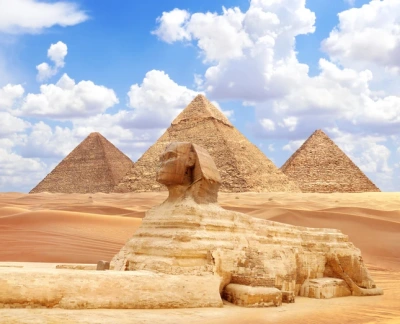
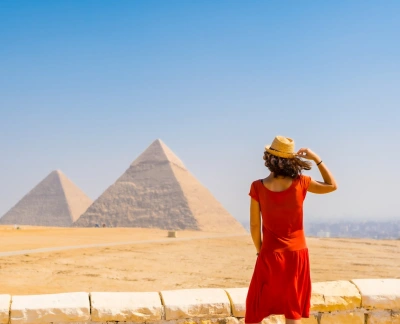
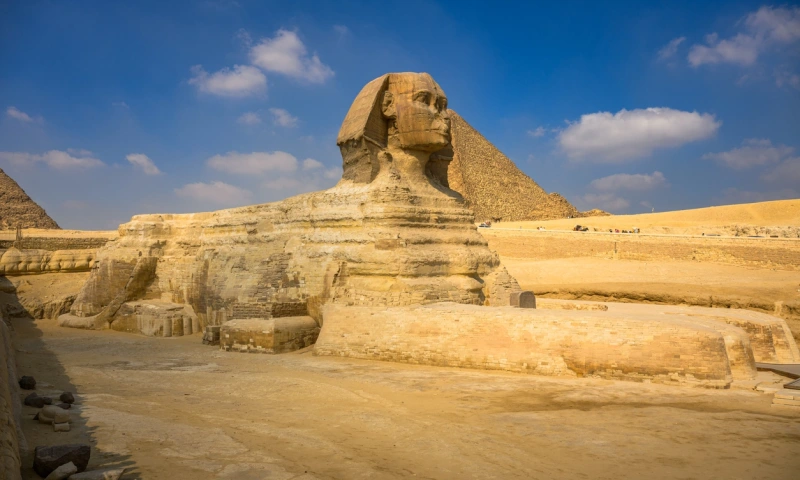
The Giza Pyramids and the Great Sphinx are iconic ancient Egyptian landmarks. The ancient Pyramids of Giza were built as tombs for Egypt’s pharaohs, and the Great Sphinx is a giant statue that resembles a lion with a human head and is located on the Giza Plateau.
Additionally, travelers can explore Saqqara, which features a different style of pyramid called the Step Pyramid of Djoser, as well as ancient artifacts. Those who want to see real ancient relics should visit Cairo, Egypt, and explore its collection of ancient artifacts and unearthed treasures, including statues and hieroglyphics, and the burial artifacts of ancient Egyptian pharaohs. There is much more to see in this city; therefore, travelers must allocate enough time to see the main sights. Readers can find more information regarding Cairo’s main attractions in the Volkena’s Cairo Attractions .
Luxor: Temples and Royal Tombs
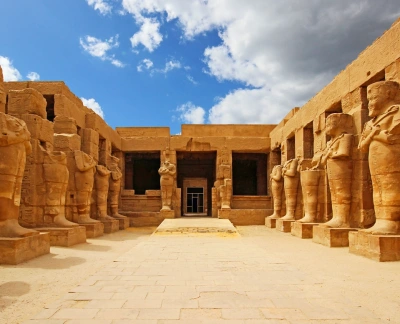
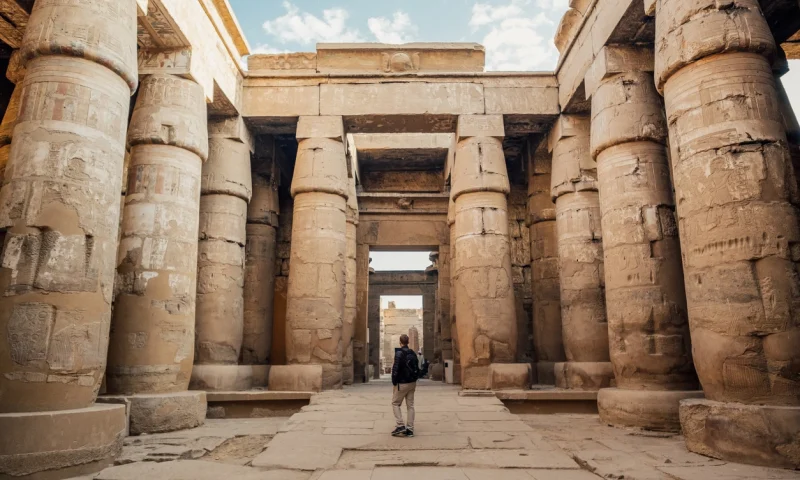
Luxor is an ancient city located in the former capital of Egypt – Thebes. The Karnak temple is the largest temple complex famous for its unique architecture and fascinating history. The ancient monuments found in the city are treasures of the past, attracting thousands of tourists from different parts of the world. The two most popular temples that invite you to discover Egypt are Karnak and Luxor.
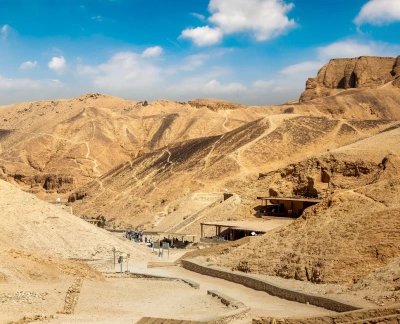
On the other side of the Nile, the Valley of the Kings is another significant monument of ancient Egypt. This valley is filled with ancient tombs belonging to the powerful Egyptian pharaohs. Painted murals illustrate a fascinating story behind many tombs’ decoration. You will also find a collection of ancient artifacts used during the burial process.
While in Luxor, I recommend downloading the Volkena’s guide called Luxor Sightseeing. This guide gives essential information about temples and archaeological sites in Luxor.
Aswan: Religious Monuments and Southern Egypt
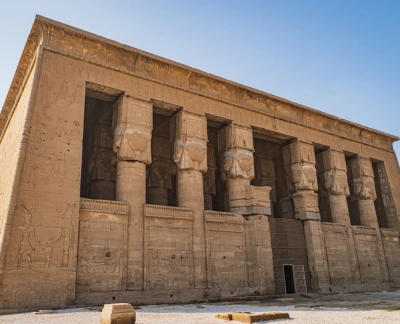
Aswan is another famous destination located in southern Egypt. It is known as the center of ancient religious monuments, including the Philae temple dedicated to the goddess Isis. This temple has one of the most extensive collections of ancient reliefs and statues preserved in Egypt.
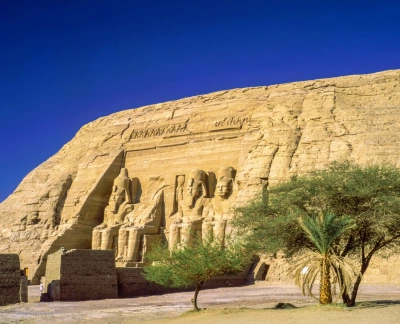
A famous monument called Abu Simbel is also worth visiting. It is a complex of temples built by the Ancient Egyptian Pharaoh Ramses II and decorated with colossal statues. Abu Simbel’s temples are located at the southernmost part of Egypt, near the border with Sudan. If you need more information about monuments in southern Egypt, I recommend downloading the Volkena’s guide: Aswan Attractions .
Which Historical Sites Should First-Time Visitors Prioritize?
It depends on the visitor’s interests and available time to determine the most worthwhile monuments. The Giza Pyramids and Saqqara are perfect for those interested in pyramid construction history. Meanwhile, Karnak, Luxor, and Philae Temples are more impressive for those who want to see ancient Egypt’s religious culture.
A Valley of the Kings tour is the most appropriate way for guests to understand the ancient Egyptian concept behind the deceased pharaohs’ burial practice. Moreover, Valley of the Kings has a range of decorated tombs with unique hieroglyphs that provide valuable insights into the social and cultural aspects of ancient civilizations. Hence, it is worth considering a visit to both monuments and museums offering precious artifacts and treasures excavated from royal tombs and ancient temples.
While exploring ancient Egypt, it is better to view a variety of remarkable structures and artifacts rather than focus exclusively on a particular category. Furthermore, it might be useful to have tour guides capable of providing credible information about the history and mysteries of the ancient civilization.
How to Plan an Ancient Egypt Itinerary
When planning your first historical trip, think about how far you’ll travel between the sites and how long you want to spend at each. Cairo and Giza: the best place to start exploring the pyramids and the country’s largest museum complex. Explore Luxor and Aswan to see ancient Egyptian temples and tombs.
If you have more time at your disposal, think about visiting both of these cities in one go or Multi Country Tours. You can also add a Nile cruise to your tour of ancient Egypt – it provides a great opportunity to see more of the country. See our Egypt Nile Cruises page to see what cruises are available right now.When seeing historical sights, it’s important you don’t cram too many attractions in at once. Think about the travel time between destinations and the guided tours – they take time, too. And don’t forget that some archaeological sites take time to explore. If you want to Visit Egypt properly, try structuring your time in the country around geographical regions.
Practical Tips for Visiting Archaeological Sites
A few tips may significantly improve your trip experience while visiting ancient Egyptian ruins. First of all, comfortable shoes are essential as some of the monuments are situated at quite a distance from each other, and you may have to walk much on rough stone-paved or sandy surfaces. Besides, you should bring drinking water and sun cream as many of the open-air excavations are located in desert-like surroundings and can be quite hot there during daytime.
It is also a good idea to find specific information about the visiting hours, ticket fees, and visitor regulations because they may vary from monument to monument. Moreover, photography is often prohibited inside the excavation sites, museums, or tombs; therefore, it is better to ask in advance and equip yourself with the knowledge of what to do and what not to do while visiting historical places.
It is essential to respect the local regulations and the rules within the preserved monuments and not try to touch or climb some of the exhibits. In addition, it may be beneficial for understanding ancient history to book an experienced guide who will be able to provide professional stories connected with the hieroglyphs, architecture, and religion you observe on your tour. The most pleasant surprise awaits those travelers who do not plan to grasp a bunch of monuments while having a short overview of every single one. Instead, be prepared to get lost in the history of Ancient Egypt while exploring every meaningful detail of the major archaeological discoveries.
FAQs
1. What are the must-see ancient Egyptian sites for a first-time visitor?
The most notable places to see in Ancient Egypt are the Giza pyramids, the Great Sphinx, Saqqara, Karnak temple, Luxor temple, Valley of the Kings, and Philae temple. Depending on the traveler’s preferences, route, and time, it is possible to create an exclusive itinerary with the most popular sights to visit.
2. How many days do I need to spend in Ancient Egypt to see the main attractions?
The number of days required to see Ancient Egypt is highly dependent on the expected destinations of a traveler. Choosing between Cairo and Giza or including them with Luxor and Aswan would deliver vastly different results. Therefore, the options may be discussed in detail depending on the selected route and means of transportation.
3. Does it make a difference if I choose to base myself in Luxor or Cairo when visiting Ancient Egypt?
Cairo and Giza are historically significant as the heart of Egypt as well as the location of the most popular and iconic monuments of Ancient Egypt, including the Great Pyramid of Giza. On the other hand, Luxor is home to the most significant ancient Egyptian structures of worship, royal family tombs, and ancient fortresses. It might be worth visiting both cities to see the different aspects of ancient Egyptian culture and history.
4. What is the best way to tour Egypt’s ancient temples and tombs?
One of the best ways to explore Ancient Egypt is to base touring on the location of destinations, the time required to see each monument, and additional comfort and convenience. For example, it is possible to create an itinerarian that includes multiple destinations, or hire a guide, or book a cruise along the Nile river, depending on personal preferences.
5. What should a first-time traveler know before visiting Ancient Egypt’s rock-hewn monuments and tombs?
Before visiting ancient Egyptian rock-hewn monuments and tombs, first-time travelers may want to learn more about the history of ancient civilizations, the role of the Pharaoh, and the significance of tombs in ancient culture. Moreover, it is essential to equip appropriately for exploring ancient Egypt, including comfortable clothes and shoes, sunscreen, and other necessities. Additionally, travelers should research modern regulations of each monument to ensure there are no restrictions before visiting.