

Introduction
Alexandria is a city located on the coast of Egypt’s Mediterranean Sea and was founded by Alexander the Great in 331 BC. It was the capital of the Ptolemaic kingdom and considered one of the most important cities in the eastern Mediterranean. Today, the Alexandria Egypt attractions include unique museums, archeological finds, and medieval buildings. Moreover, travelers can admire the beauty of the Mediterranean Sea and study Alexandria’s rich history.
Those who plan to explore different cities of Egypt can get acquainted with Egypt Travel Packages to understand what other places are worth visiting and how to build an itinerary.
Egypt Nile Cruises are also an excellent option for those who want to see more of Upper Egypt along the river by cruise.
This Alexandria Egypt Guide aims to help travelers see the major sights of the ancient city and modern Alexandria. It includes the most popular attractions and provides a list of travelers’ options for museums, monuments, and archeological discoveries that pique their interest.
Table of content:
The Best Alexandria Egypt Attractions to Visit
Discover the cultural and historical highlights of Alexandria Egypt. From the Qaitbay Citadel and catacombs to roman monuments and fascinating museums, the city has plenty to offer to explore its vibrant and diverse history.
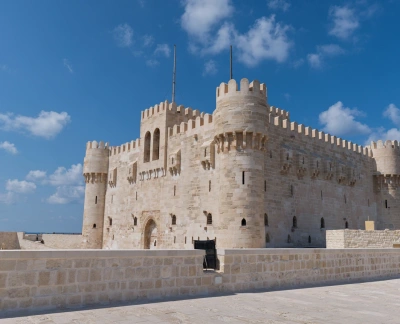
Qaitbay Citadel
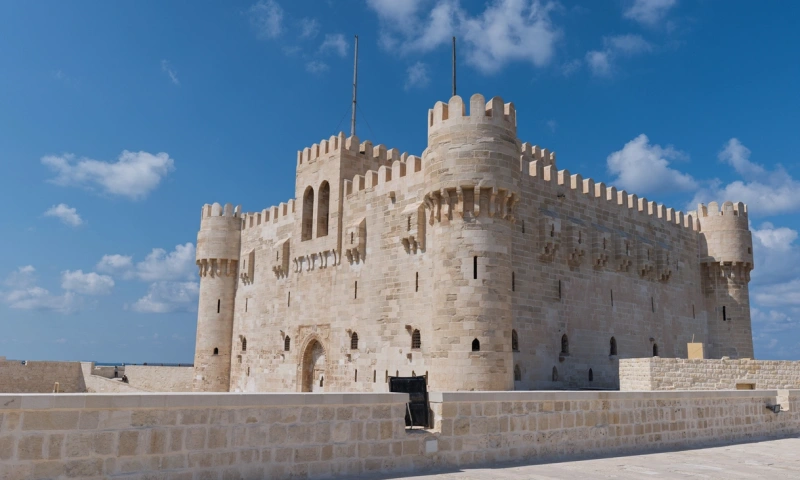
Located at the eastern extremity of the Pharos Peninsula, this castle complex is one of the most notable structures in Alexandria, Egypt. The castle was constructed by the Sultan al-Ashraf Abu al-Nasr Qaitbay between 1477 and 1479 as a part of the coastal defense system. It was erected on the remains of the ancient Lighthouse of Alexandria. The building is made of limestone and comprises an outer wall with several towers, an inner wall, a central courtyard, and a unique tower-fortress. Due to its strategic location, the castle offers a spectacular view of the Mediterranean Sea and serves as an excellent base for exploring Alexandria’s ancient maritime legacy.
Catacombs of Kom El Shoqafa
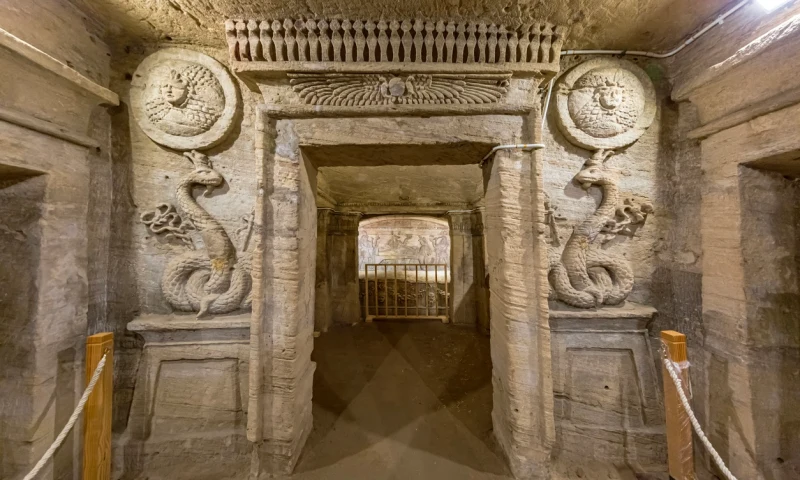
The Catacombs of Kom El Shoqafa are a notable remnant of ancient Alexandria, representing one of its ancient necropolis. It includes rock-cut tombs, a chapel, and a banquet hall on a ground plan that reflects a fusion of Egyptian, Hellenistic, and Roman elements. One might say that it is indeed a fine example of the synthesis of cultures in Alexandria.
This place would interest an ordinary visitor, who would like to see the cultural heritage left by the ancient ancestors. Moreover, it could also become an object of research for those who want to study the history and culture of Alexandria.
Pompey’s Pillar and the Serapeum
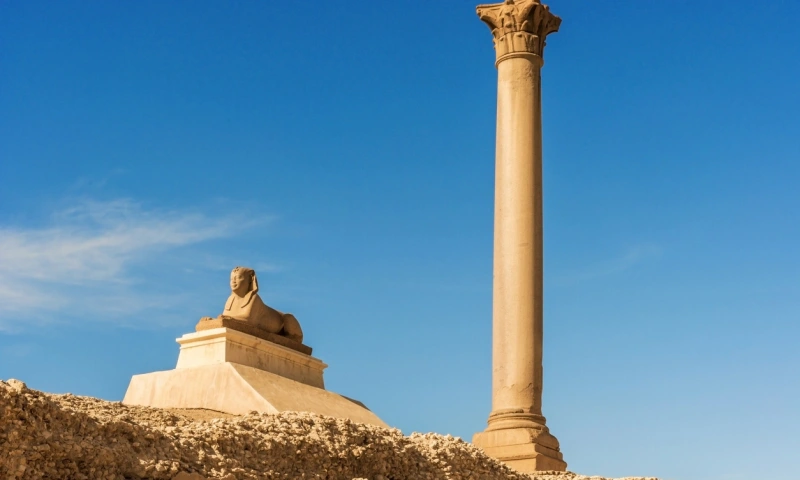
One of the most notable architectural structures discovered in Alexandria is known as Pompey’s Pillar. The monumental column, which was erected at the end of the 3 rd century AD, was traditionally called Diocletian’s Column. This construction is historically significant because it is located near the Serapeum’s remains, which were the main temple of Serapis.
Therefore, the area around the column has great historical value since it symbolizes the city’s religious and political power within the Roman province. Moreover, the study of the architectural complex under the column throws light on Alexandria’s history as a center of culture and religion in the ancient world.
Kom El-Dikka
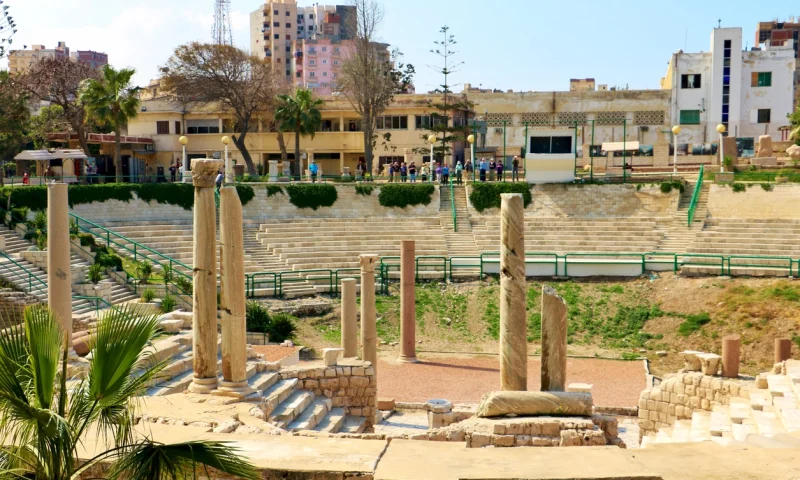
Kom El-Dikka is an archaeological site in central Alexandria with the remains of the Roman and Byzantine buildings. There are many different constructions of ancient Alexandrians, such as a magnificent Roman theater, Roman Baths, a Lecture Hall, Mosaic floors, and various other buildings that formed part of an ancient urban community.
These archaeological finds are significant for studying the life and social structure of the ancient city and its residents. For tourists, the ancient amphitheater in Alexandria is an example of architectural and cultural achievements of the ancient world.
Cultural and Historic Places to Add to Your Alexandria Egypt Travel Guide
Bibliotheca Alexandrina
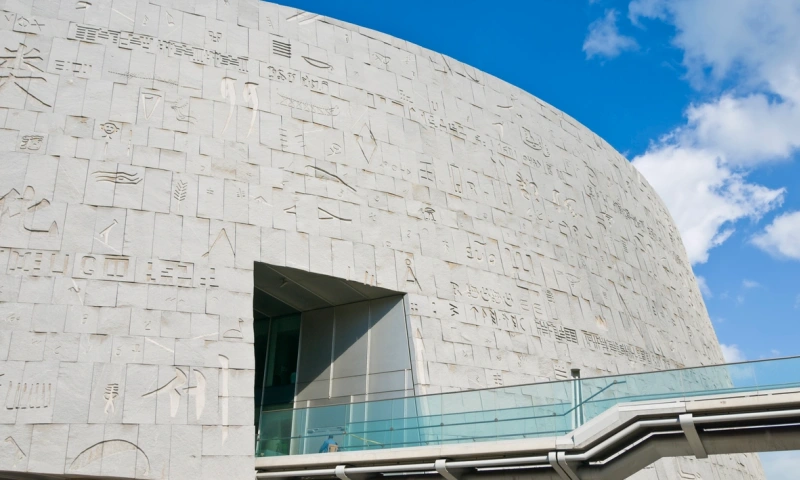
The modern Bibliotheca Alexandrina is a tribute to Alexandria’s great scholarly tradition. As you tour the facility, guides will share the history of the ancient library, as well as the modern library’s collections, museums, and exhibitions.
The museums and their permanent exhibitions are excellent additions to any Alexandria, Egypt guide. They provide insight into the city’s archaeological legacy while introducing visitors to a modern cultural institution at the forefront of knowledge preservation.
Royal Jewelry Museum
The Royal Jewelry Museum is another great way to experience the history of Egypt through the royal family’s belongings. This museum is a part of the palace that was specially constructed in 1919. The building contains the jewelry and other property belonging to Egypt’s royal family, namely the Muhammad Ali dynasty’s members.
Notably, the palace buildings are also considered a part of the museum, hence visitors are able to admire the European and Islamic style decorations, gilded ceilings, and mosaic floors. Altogether, the historical collection and unique architecture of the museum complex allow travelers to deepen their understanding of Egypt’s royal family and its culture.
In addition, those interested in exploring more destinations can refer to Egypt Travel Guide by Volkena for obtaining the essential travel insights and planning an itinerary.
More Places to Visit in Alexandria Egypt
Besides the prominent archaeological sites and museums, Alexandria’s natural setting also contributes to the city’s character. Notably, the Eastern Harbour was once the royal port of Alexandria, while the coastal region around it has uncovered numerous traces of the city’s underwater archaeological legacy.
One might continue their journey to Cairo Attractions to learn more about the capital of Egypt’s popular sights and historical buildings. Furthermore, those fascinated byUpper Egypt’s allure may consult Aswan Attractions to compare and choose between potential destinations.
FAQs
1- What are the main Alexandria Egypt attractions?
The main sights to see in Alexandria include the Qaitbay Citadel, Catacombs of Kom El Shoqafa, Pompey’s Pillar, Kom El-Dikka, Bibliotheca Alexandrina, and the Royal Jewelry Museum. All of these landmarks were significant throughout the city’s ancient and modern history.
2-Is Alexandria worth visiting for history?
Indeed, Alexandria contains a number of archaeological remains dating back to the Hellenistic, Roman, and Byzantine periods, as well as modern monuments such as the Qaitbay Citadel and museums representing Egypt’s royal history. Consequently, the city offers a wide range of historical buildings and structures left by former civilizations and attracting many tourists.
3- What should I include in an Alexandria Egypt travel guide?
A good Alexandria Egypt Guide should also include information about ancient archaeological sites found in the city, the Bibliotheca Alexandrina, museums, and the Mediterranean Coast. Moreover, it might be helpful for a tourist to get some suggestions on what places are worth visiting first to plan their route better and save time.
4- What is Alexandria best known for?
Alexandria is associated with Ancient Greek history, Ancient Library and Ancient Lighthouse, and its Ptolemaic and Roman legacy. Today, it is a cosmopolitan port city located on the Mediterranean Sea. Despite the fact that most of the ancient structures have been destroyed, modern archaeological excavations and numerous shipwrecks are evidence of Alexandria’s rich history.
5-Is Alexandria suitable for a day trip?
Yes. It is possible to visit Alexandria on a day trip basis, primarily to explore the main sights and archaeological attractions. It is possible to plan a tour of major attractions, including the Qaitbay Citadel, Catacombs of Kom El Shoqafa, Pompey’s Pillar, and Bibliotheca Alexandrina.