

Introduction
Luxor is home to huge sandstone pillars and statues and has been occupied for thousands of years. The Luxor Temple is one of Egypt’s most impressive historical buildings and provides an insight into the rituals, religion and architecture of the Pharaohs.
Throughout history, many people have built and developed this spectacular temple. The temple’s magnificent doorway, elaborately decorated carvings and stunning inner courtyards all provide information regarding both the kings’ authority and their religious commitment.
Unlike other temples which are located in more isolated desert areas, Luxor’s ancient temple is located in the centre of today’s city. It is, therefore, a key attraction for those travelling in Upper Egypt.
Whether you are drawn to history or architecture, here we highlight some of the key buildings within the Luxor Temple and the significance of these.
Those wishing to experience the culture of Egypt can be inspired by Volkena’s range of Egypt Travel Packages.
Table of content:
Where Is Luxor Temple Located in Egypt?
The temple is situated on the eastern bank of the Nile in central Luxor, around 3km from Karnak.
In the past, this area was part of Thebes, which was a major religious and political centre in Egypt.
Nowadays, the temple is part of Ancient Thebes with its Necropolis, a UNESCO World Heritage Site. Within this site there are many significant temples together with royal cemeteries.
Why Was This Location Important?
Ancient Thebes was strongly connected to the cult of Amun, arguably the most important Egyptian deity.
Furthermore, due to its position, the temple was able to take part in processions between various places of religious significance.
Being on the banks of the Nile also related the temple to the natural environment which underpinned ancient Egyptian society.
Is the Temple Close to Other Attractions?
Indeed. The temple can readily be included in a tour of other historical sites on the eastern bank of the river.
Sites of interest in the area include Karnak, the Luxor Museum and Avenue of Sphinxes.
To obtain more general information regarding Luxor’s archaeological sites, refer to Volkena’s Luxor Sightseeing guide.
What Is the History of Luxor Temple?
This temple can be dated back to the New Kingdom period. However, archaeological studies have shown that the southern sanctuary has evolved over time.
The ancient Egyptians referred to it as Ipet-resyt - which translates as ‘Southern Sanctuary’.
Whilst there are also mortuary temples built for the pharaohs, this was particularly significant as a religious site for rituals relating to kingship.
Why was the Temple Significant?
The southern sanctuary was a key venue for the Opet Festival, one of the most important religious events held in ancient Thebes.
As part of the festival, highly decorated floats containing representations of Amun, Mut and Khonsu paraded from Karnak to the southern sanctuary.
The rituals focused on the link between the gods and the Egyptian kingship.
How were Karnak and Luxor Related?
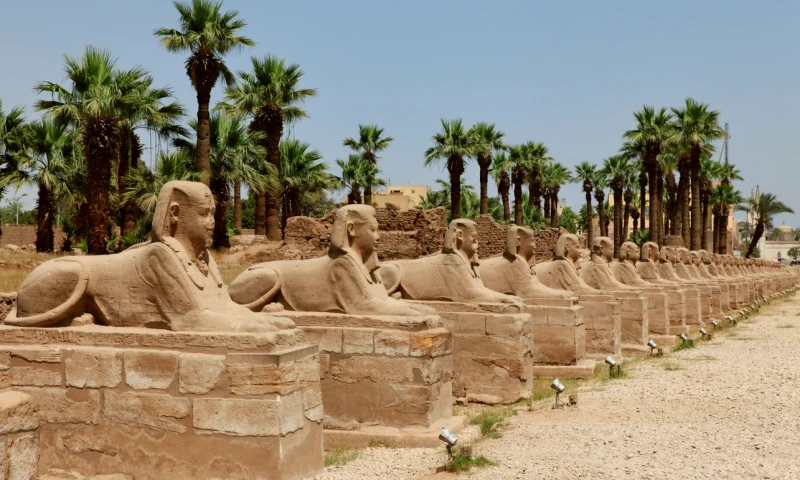
A sphinx lined processional way linked the two religious sites together.
This enabled the temples to be related to each other at key religious times.
Nowadays, the re-constructed Avenue of Sphinxes affords an impressive view of the ancient religious environment.
To further investigate the northern sanctuary and its massive Hypostyle Hall, refer to the Karnak Temple guide on Volkena.
Who Built Luxor Temple and Which Pharaohs Expanded It?
Construction of the monument has been carried out over a number of reigns.
Evidence remains of the efforts of influential New Kingdom kings and subsequent people.
What did Amenhotep III build?
Throughout the Eighteenth Dynasty, Amenhotep III built many of the main parts of the temple.
This included the beautiful open courtyard, grand colonnade and sacred chamber.
These are key elements which helped to define the temples grandeur and formal nature.
What did Ramesses II build?
Ramesses II further developed the temple by building an impressive pylon gateway, expansive courtyard and giant statues of himself.
In front of the gateway, he also built two magnificent obelisks.
Whilst one of these is still located in Luxor, the second was moved to Paris in the nineteenth century and can now be seen in the Place de la Concorde.
Did Tutankhamun contribute to the temple?
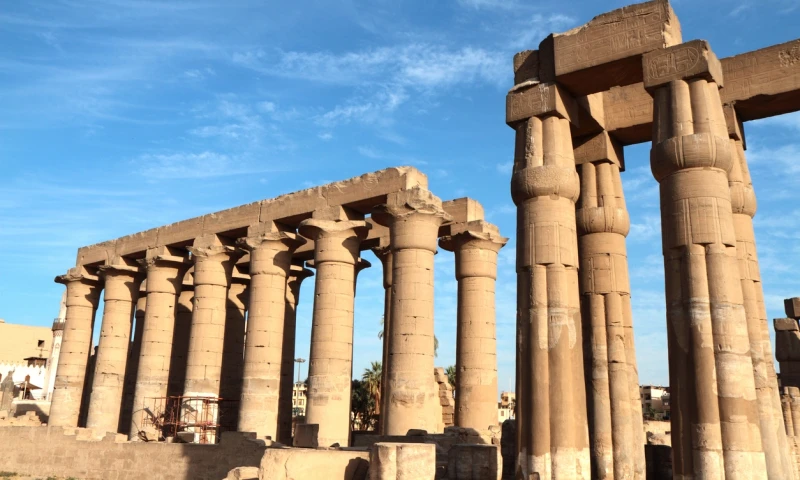
Tutankhamun is known to have been involved in the embellishment of the Great Colonnade.
The reliefs here illustrate various rituals and are an important source of information regarding past religious practices.
Further embellishment of the temple was also undertaken by Horemheb.
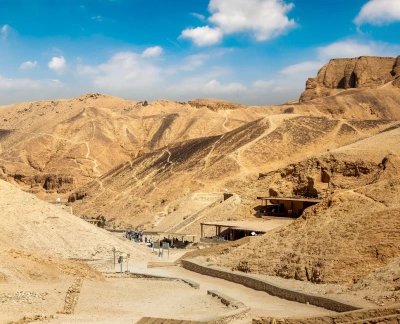
To gain further insight into New Kingdom kings, Volkena's Valley of the Kings Tombs guide describes the tombs of a number of renowned pharaohs.
What Are the Most Interesting facts about luxor temple?
As well as being aesthetically impressive, there are many other elements of the monument which show how, in Ancient Egypt, aspects of religion, politics and daily life were all related.
Why is the Temple orientated in such an unusual way?
Whilst many Egyptian temples were orientated to face east and west, Luxor's temple was aligned to Karnak as both sites had a strong religious link.
Furthermore, the design of Luxor's temple highlighted the significance of processions in Ancient Thebes.
What happened to the second Obelisk?
Originally, there were two obelisks at the temple's entrance; both had been constructed by Ramesses II.
In the 19 th Century one of these was transported to France and is now a well known building in central Paris.
Today, the second obelisk can still be seen in front of the temple entrance.
Why is there a Mosque in the Temple?
Within the old temple complex there is a Mosque, called the Mosque of Abu Haggag. This demonstrates how the area has been continually used throughout history.
The Mosque is linked to the medieval Islamic religious leader Abu Haggag.
Clearly then, the existence of the Mosque is a striking illustration of how various time periods have influenced this one site.
All of these elements therefore render this monument especially interesting for those wishing to explore aspects of Egypt's culture and religion.
What Can You See Inside Luxor Temple?
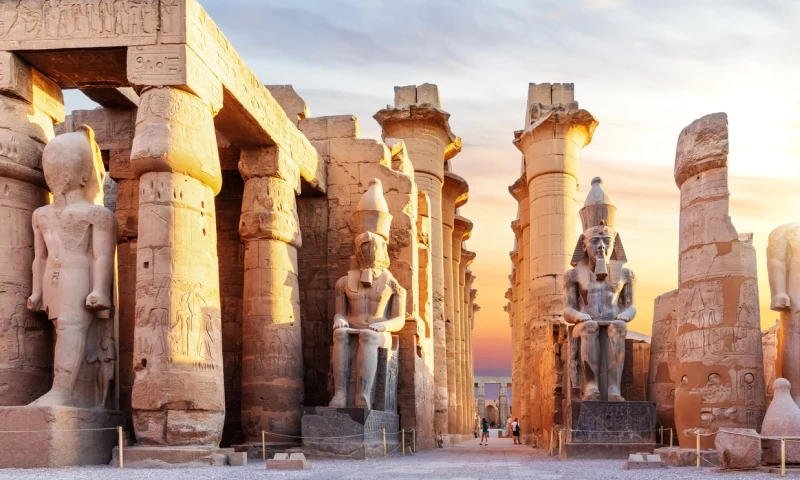
As you walk around the site there are pylons, courtyards, temples and decorated walls.
Each section provides a different insight into the past and original function of the temple.
The First Pylon and Colossal Statues
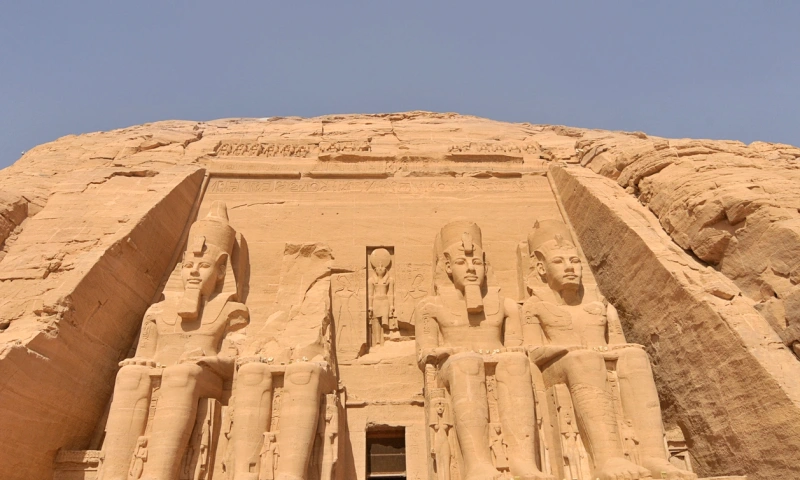
The grand pylon was built during the reign of Ramesses II and forms the main feature at the temple entrance.
Gigantic statues of the pharaoh are positioned either side of the pylon and provide a striking welcome to the temple.
Furthermore, a remaining obelisk highlights the significance of this site.
Court of Ramesses II
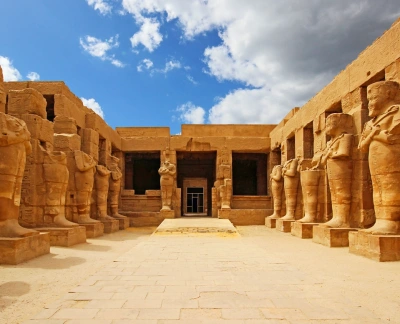
Further on, there is a spacious courtyard enclosed by columns and statues.
This illustrates how the pharaoh sought to make a lasting impact on both tourists and those who came to worship.
The Mosque of Abu Haggag is built over part of this old courtyard.
The Great Colonnade
Within this section are fourteen huge columns, positioned in two lines.
Both the height of these columns and their papyrus like tops are testament to the engineering expertise of the ancient Egyptians.
Furthermore, the walls are adorned with images relating to the Opet Festival.
Court of Amenhotep III
This stunning courtyard is enclosed by graceful columns and opens up into further sections of the temple.
People can appreciate the design, and the high quality of construction, together with the remaining structures.
There is also an inner room within the site which relates to Alexander the Great. This demonstrates that even after the New Kingdom, the temple still held significance.
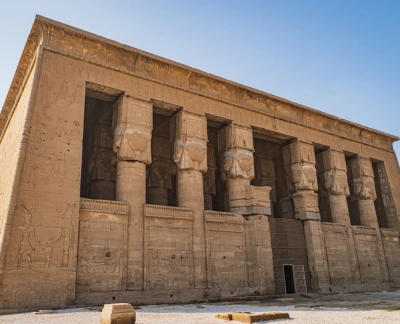
Those who love to investigate Egypt’s temples and places of worship may also be interested in Volkena’s Hathor Temple Egypt guide to Dendera.
What Should You Know Before Visiting Luxor Temple?
Whilst being amongst Luxor's most accessible archaeological sites, prior research will enable you to further understand the temple.
When should I visit?
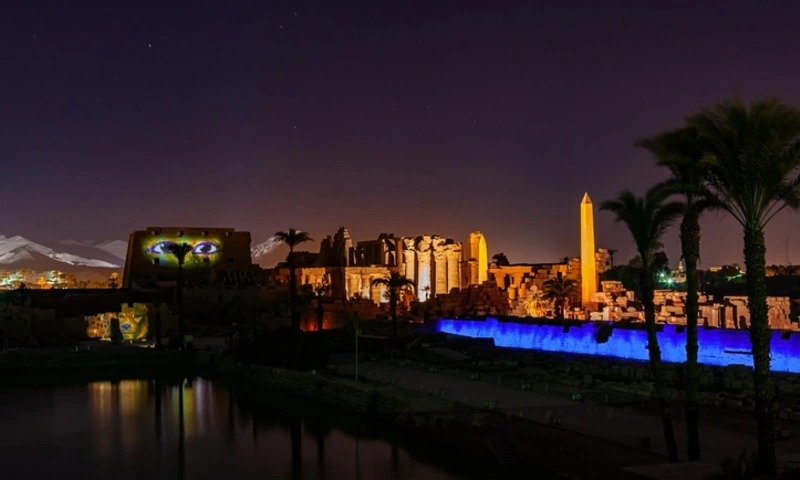
Whilst mornings are a good time to explore, many people also enjoy visiting in the evening so that the impressive statues and sandstone columns can be viewed effectively with lighting.
Generally, spring and autumn are favourable times of year to experience Luxor's culture.
How long should I spend there?
On average, one to two hours is suitable for the key sites.
Those with an interest in history may wish to extend their time so that they can study the reliefs, walk around the courtyards and take pictures of the architecture.
A good guide can provide information regarding the religious significance of the temple and the roles of various pharaohs.
What to take with you?
Appropriate footwear, suncream, sun glasses and water are all advisable.
As mentioned above, many people enjoy taking photographs, especially of the entrance statues and colonnade.
Please consult current details about opening times, entry requirements and photography restrictions on official Egyptian heritage site information pages.
If you are travelling to, as well as within Luxor, to discover more historical sites along the Nile, then Volkena's Egypt Nile Cruises may be of interest.
Volkena's Multi Country Tours can also provide suggestions for further travel if you are looking to continue your adventure outside Egypt.
FAQs
1. How Old Is the Luxor Temple Complex?
The majority of the temples were constructed in the New Kingdom and in particular during the time of Amenhotep III (fourteenth century BCE).
2. Who Built the Temple?
Amenhotep III constructed much of the main temple. Ramesses II built the grand doorway, open space, statues and obelisks.
3. What Are the Most Important facts about luxor temple?
Luxor temple was a key location for the Opet Festival. It was also linked to the Karnak temple by a processional way. The temple was further developed by a number of well known pharaohs.
4. Is Luxor's Temple Different from Karnak?
Yes. Although both are distinct temples, they differ in design. However, both were significant in the veneration of Amun.
5. Can You Visit the Temple at Night?
Usually it is possible to do so within the set visiting times. Always check what the current opening times are prior to your visit.